With the rapid expansion of high-performance lighting applications—from large-scale sports venues and new energy vehicle lighting to high-end commercial displays and medical surgical lighting—the demand for high brightness LED FPCB (Flexible Printed Circuit Board) has surged. A reliable High Brightness LED FPCB Manufacturer plays a pivotal role in this ecosystem, as it is not only a producer of core components but also a co-innovator that empowers downstream industries to achieve breakthroughs in lighting performance, design flexibility, and energy efficiency. Unlike ordinary LED FPCB manufacturers that focus solely on basic functionality, a professional High Brightness LED FPCB Manufacturer integrates advanced material technology, precision manufacturing processes, and customized solution capabilities to meet the stringent requirements of high-luminance, high-stability lighting scenarios. For enterprises engaged in lighting system design, automotive electronics, and display technology
In lighting applications across harsh and humid environments—from outdoor landscapes and marine engineering to underground corridors and agricultural greenhouses—reliability and durability are critical requirements. The Waterproof LED FPCB Lighting Board has emerged as a game-changing solution, combining the flexibility of flexible printed circuit boards (FPCB) with advanced waterproof technology. Unlike traditional rigid PCB lighting boards that are prone to failure in humid conditions and lack adaptability to irregular surfaces, this innovative lighting board delivers stable performance in moisture-rich environments while fitting complex shapes. For engineers, project managers, and facility operators, the Waterproof LED FPCB Lighting Board is a core component to ensure long-term lighting stability, reduce maintenance costs, and expand the application scope of LED lighting. This article explores the core value, scenario-specific applications, implementation guidelines, and future tren
The relentless pursuit of smarter, more adaptive electronic devices has made Flexible Printed Circuit Board (FPCB) a transformative force in the electronics industry. Unlike traditional rigid PCBs that constrain device design to fixed shapes and sizes, FPCB introduces unprecedented flexibility, enabling engineers to reimagine product forms while enhancing performance and user experience. From ultra-thin wearables that conform to the human body to curved automotive interfaces that blend seamlessly with interior designs, FPCB has become the backbone of innovative electronic products across sectors. As consumer demand for portability, ergonomics, and multi-functionality grows, the role of FPCB in shaping the future of electronics continues to expand.
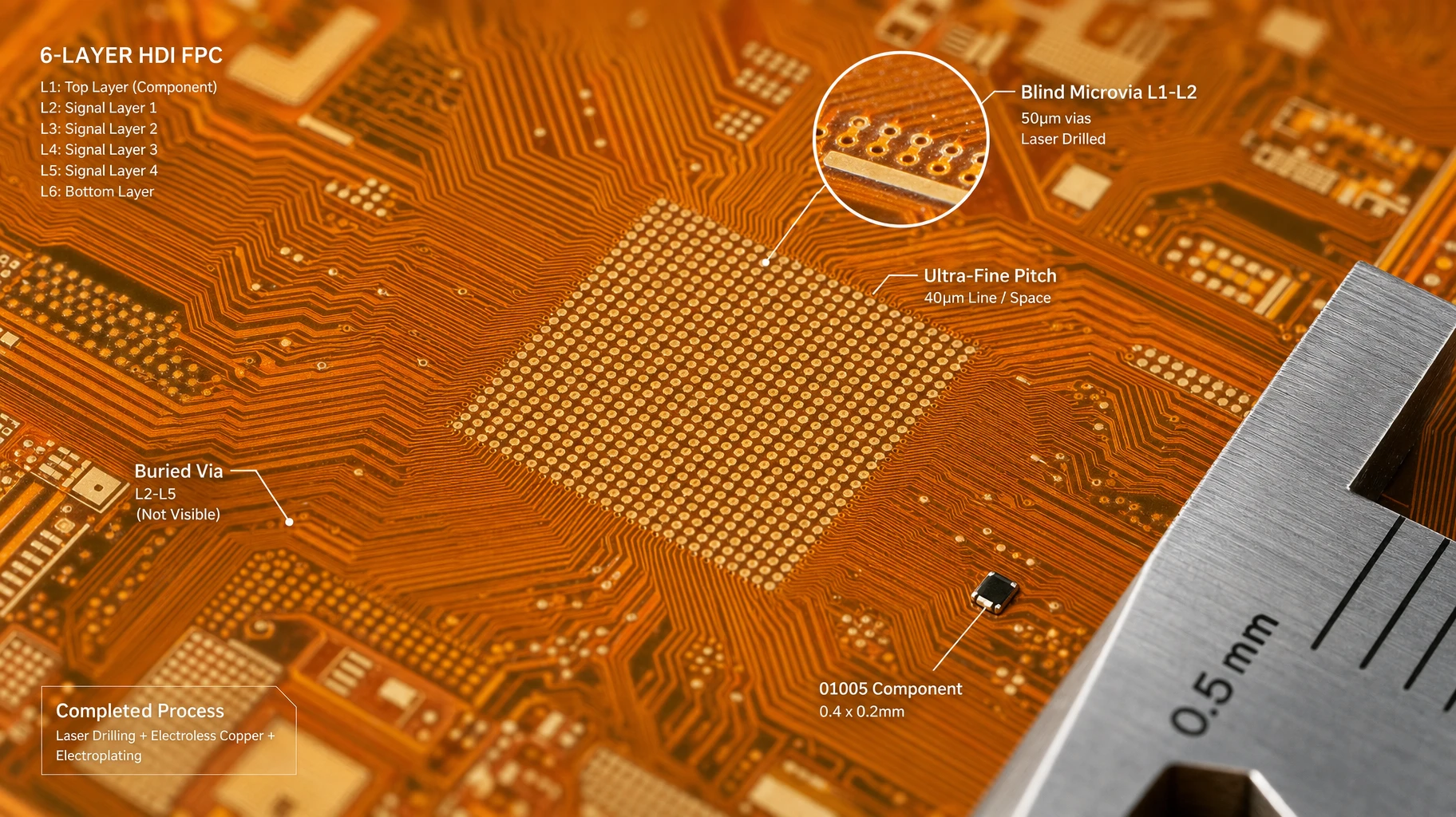
As electronic devices pursue higher integration, slimmer form factors, and more reliable performance, the demand for advanced flexible printed circuit board (FPCB) technologies continues to grow. Among these innovations, blind and buried vias FPCB stands out as a game-changing solution, integrating two specialized via technologies to overcome the limitations of traditional FPCBs. Blind vias connect outer layers to inner layers without penetrating the entire board, while buried vias link inner layers exclusively—together, they redefine circuit layout efficiency, signal integrity, and space utilization. Blind and buried vias FPCB has become a cornerstone for high-end electronic products across industries, enabling designs that balance flexibility, compactness, and high performance.
As wireless communication technology evolves toward higher frequencies, wider bandwidths, and miniaturized form factors, the demand for reliable, high-performance flexible printed circuit boards (FPCBs) in射频 (RF) applications has surged. RF Application Blind Vias FPCB emerges as a critical solution, tailored to address the unique challenges of RF signal transmission—such as signal loss, electromagnetic interference (EMI), and impedance instability—while leveraging the flexibility and space-saving advantages of FPCBs. Unlike standard FPCB designs, RF Application Blind Vias FPCB integrates blind vias to optimize circuit layouts for high-frequency signals, making it indispensable for next-generation wireless devices ranging from 5G terminals to satellite communication systems and automotive radar modules.
Got project ready to assembly? Contact us: info@apollopcb.com



We're not around but we still want to hear from you! Leave us a note:
Leave Message to APOLLOPCB